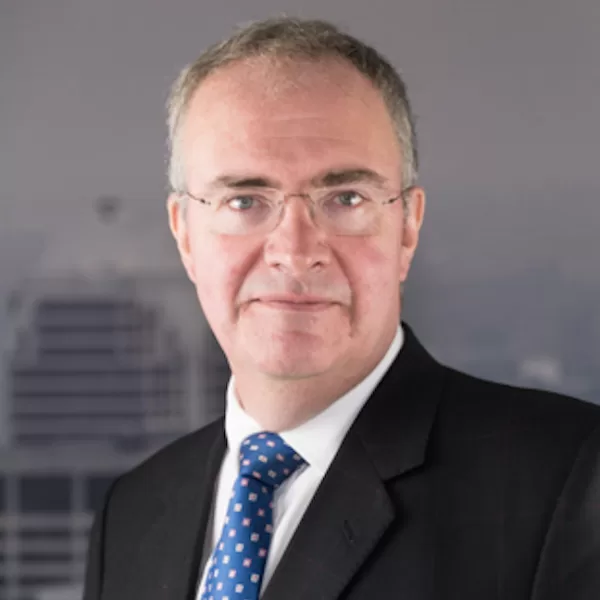
A couple of weeks ago, my time as Chairman of Kao Data – the high-performance data centre developer-operator I’ve been working with since 2017 – came to an end. It’s always hard to know the correct point to step away from anything you’re interested in and passionate about, but it was the right time to bring this journey to a close. And, what an enthralling journey it’s been.
Across my career I’ve spent more than 40 years leading institutional tech giants like EDS, Hewlett Packard Enterprise Services and CSC. In the early years of my working life ‘bigger’ always seemed better and it was the largest companies that set the tone and determined industry pace and direction.
Thanks to improved connectivity, and both the massive growth of and accessibility of the internet, the dawn of the digital age provided unprecedented opportunities for newer, better, faster, more innovative products and solutions. The high-tech start-up movement kicked in in the late 90’s and early 00’s and suddenly, almost overnight, entrepreneurial opportunities within the technology industry blossomed.
One of the knock-on effects of the growth was the accelerated development of data centres as we know them today. Data centres went from server cupboards and on-premises facilities, to front-line, mission critical institutions – helping to propel the rapid growth of cloud computing. Not long after this, in 2017, I was invited to make the leap, and joined Kao Data as its Chairman.
The step-change from big corporate to entrepreneurial start-up was a huge, exciting transformation. One regret I have today is that I didn’t make the move earlier, as within just a few days I realised just how fun and exciting the start-up/scale-up world can be.
The horizon appeared almost limitless, the energy infectious and the challenge beyond compare. This was my first chairmanship position and when I joined the company it hadn’t billed a penny in revenue and our pipeline was in its infancy. Infrastructure-wise, we had the shell of a data centre on our Harlow site but were yet to build-out our first data hall.
What we did have, however, were the best people in the business around us. Pioneers like David Bloom who had the initial vision for a data centre campus in Harlow, and respected engineers like Paul Finch and Gerard Thibault, who had the know-how, skill and passion to visualise the potential of Kao Data, and turn David’s concept into reality. In-turn they enabled us to take on some of the misconceptions of the data centre industry head-on.
Back in 2018 the established thinking was that the UK data centre industry was already consolidated around a handful of big operators who could not be challenged – so for investors eyeing growth in digital, while the data centre world remained attractive, it was perceived the premium returns had already been extracted.
One of the other concepts chiselled in stone was that the march towards hyperscale was inevitable and the newly formed colocation industry would be obsolete before it had even got going. If you weren’t part of their ecosystem and their availability zones – which in the UK means West London – you weren’t a serious player, and colocation would be side-stepped as ‘cloud first’ strategies became the trend in the city.
While there has indeed been tremendous growth of the hyperscale community during the last six years, there has also been a transformation in data centre demand amongst enterprise-scale customers between and beyond the hyperscale solutions. Colocation has become a fundamental pillar of the industry, a bridge between on-prem and on-ramps into hyperscale cloud, and a key enabler of industrial-scale computing.
Driven by continuing compute demand, increased power costs promoting the move to more energy efficient, advanced facilities and all forms of niche, high density, GPU-accelerated computing which have evolved to support AI, colocation has today reinforced its industry USP.
Reassuringly, as the market has changed, Kao Data has prospered. I’d like to say our successes have all been pre-planned with tremendous amounts of foresight, but in truth while we’ve got a lot right, our design ethos, flexibility and agility has allowed us to evolve alongside, and with the changing computing landscape.
In that respect, nothing changed the landscape faster and with more depth than the 2020-22 pandemic and the way in which we worked tirelessly to support customers during this period will always be remembered by me as one of the proudest achievements for team Kao Data. An enormous amount of gratitude needs to go to our then CEO, Lee Myall, who joined myself, Paul, Gerard and our CCO, Spencer Lamb, in helping guide the organisation through this testing period.
Not only did we survive, but we came out as award winners – successfully deploying the UK’s fastest supercomputer – NVIDIA Cambridge-1 in just 20 weeks, and all remotely. The pandemic proved to our team we were adaptable, resilient, solutions and customer-focused, and nothing could slow our upward trajectory.
Forward to 2023 and our Harlow campus is now a fast-growing alternative to crowded locations in the West of London and its proximity to both North London and Cambridge has enabled us to specialise our offering towards high performance computing (HPC) users, and those integrating AI – in all its forms – into their portfolios.
Having a collection of world class research, supercomputing, finance, AI and machine learning organisations at Harlow has enabled us to learn first-hand from some of the most innovative minds in the sector – which in-turn, has offered us the opportunity to fine-tune our offering towards the future of computing in all its high density and bespoke formats.
We’ve also taken our industrial-scale computing know-how and re-engineered it into legacy data centres in Slough and Northolt, helping us secure one of the world’s hyperscale giants as a customer. Our next step is to take everything we’ve learned and establish this in a relatively new location for data centres – Greater Manchester. It’s always harder and riskier being the pioneer rather than the settler, but also far more fun, and I’m delighted my tenure at Kao Data has culminated in us announcing what will be the North of England’s largest and sustainable, high performance data centre in Stockport.
So, six years later, the time is now right to hand the reigns back to our founder, David Bloom. I know David will spearhead Kao Data’s expansion into new European locations with his unrivalled energy and enthusiasm, and behind him, our team will continue to be trusted to support the industry’s brightest minds.
My firm belief is tomorrow’s compute users will need data centres ‘engineered for AI’, and I leave Kao Data confident that the company are, and will remain, pioneers in this pursuit.